Recruit / Voice
JOINED 2021
Why they joined and what they do now, in our employees' own words.
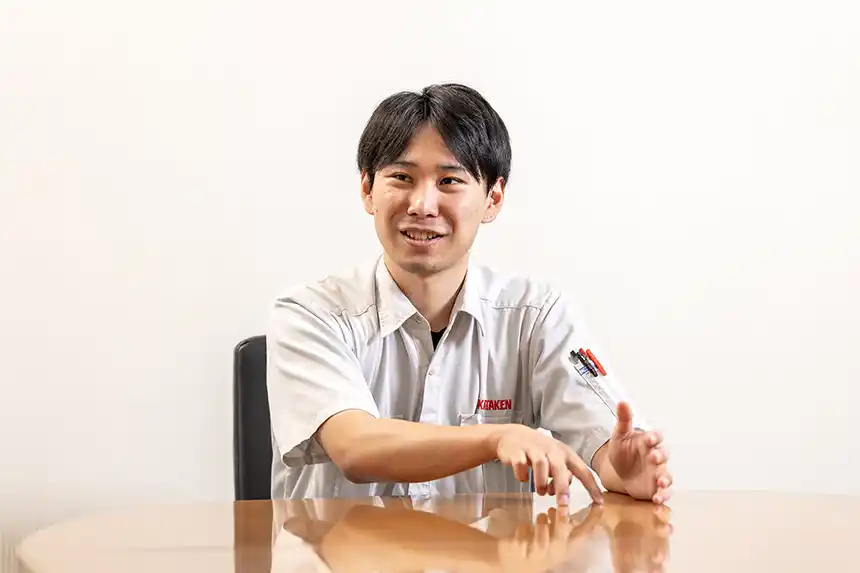
Some of the dies I've worked on have gone into long-selling products and new hits. This work also lets you help create things the world hasn't seen yet.
Joined in 2021
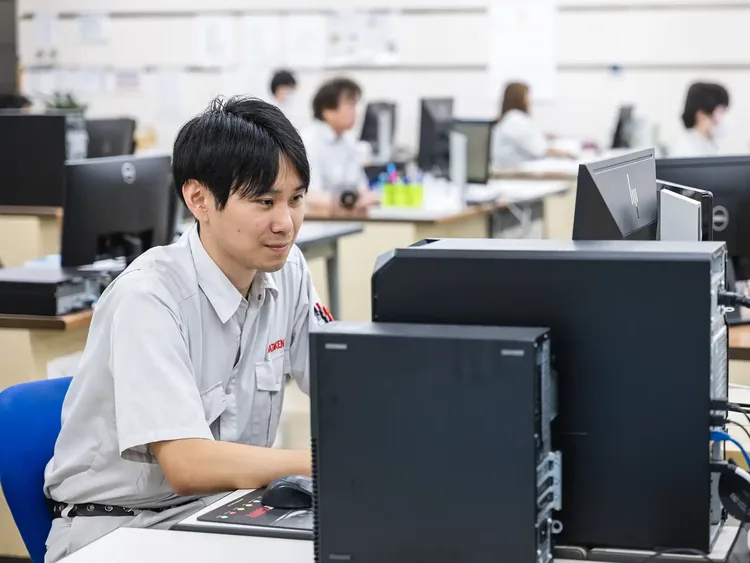
My teachers, the administrative director and the principal all encouraged me to join.
I was attending the local polytechnic college, but I didn't know about the company until I started thinking about finding a job. I wasn't particularly interested in dies at first, either. In class I learned the basics of design, machining and assembly, which sparked my interest in die design, and I asked my teachers whether there were any companies in the prefecture where I could do die design. As I looked into various options, I learned that Kataken Seiko makes all kinds of impressive dies, and I suddenly became very interested. I had imagined die making as simple bending or drawing processes, but on a plant tour I saw processes far more complex than I had ever imagined. During the tour, the plant manager explained things to me in detail, and two weeks later I took the employment exam. In the end, my seminar advisor, my die course teacher, the administrative director and the principal all encouraged me to join, and they sent me off with the message, "We're behind you, so go for it."
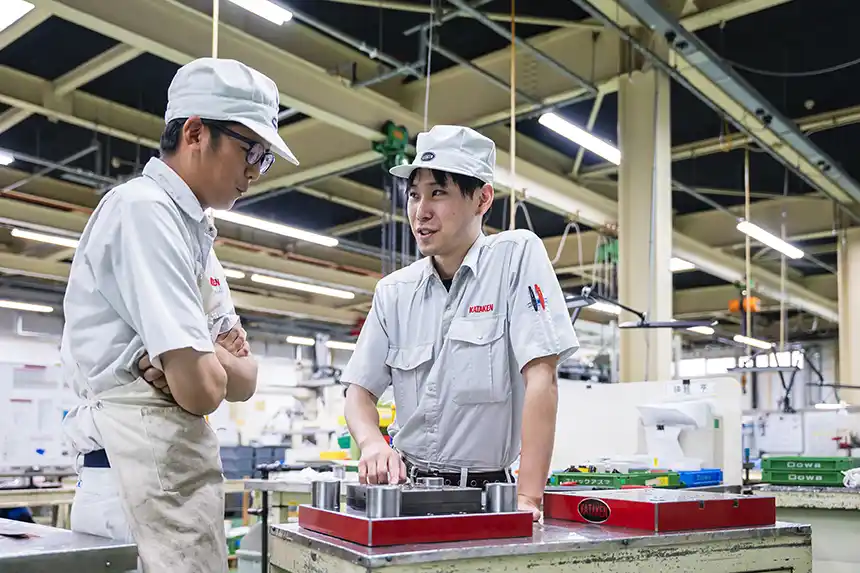
Die design is harder than I imagined.
That's what makes it interesting.
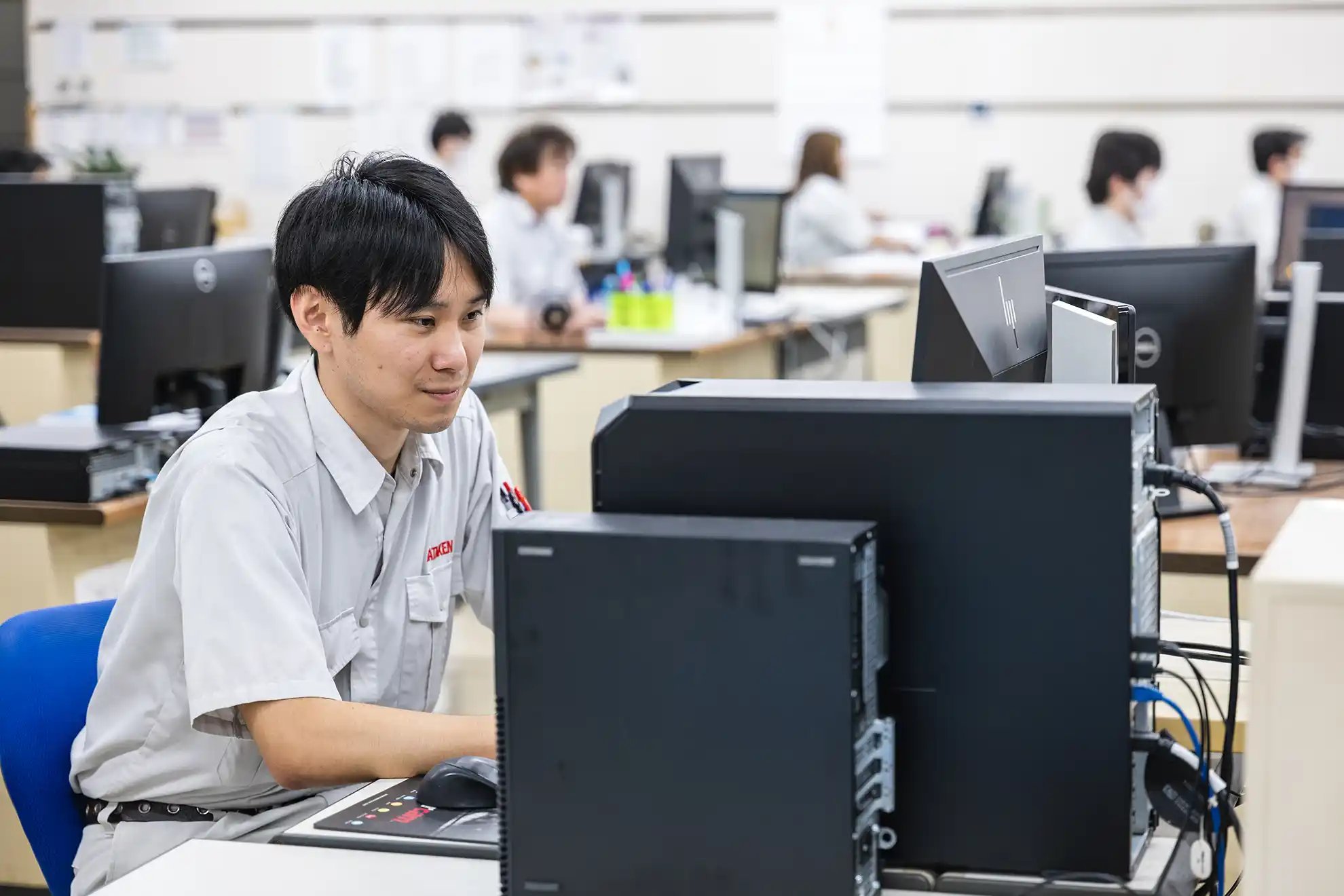
I've been working in design for about five years, and I'm still learning. Die design is as interesting as I expected before joining, but it's more than twice as difficult. Machining difficulty varies by material, such as iron, steel or copper, so designs have to take into account their effects on machining and assembly. In design, my job is to take requests from customers or our sales team, such as "We want to make a part like this," and turn them into drawings, but there are also many constraints, including machining conditions, cost and delivery time. Even when I think a design has turned out well, problems can show up in the prototype, and I sometimes have to go through repeated discussions and fine adjustments with the engineers on the shop floor. Where does the problem come from, and how can it be fixed? This is an area where experience really counts, and even AI can't handle it yet. Working on dies means repeatedly trying things out using your own ideas and skills, and that process also helps you grow.
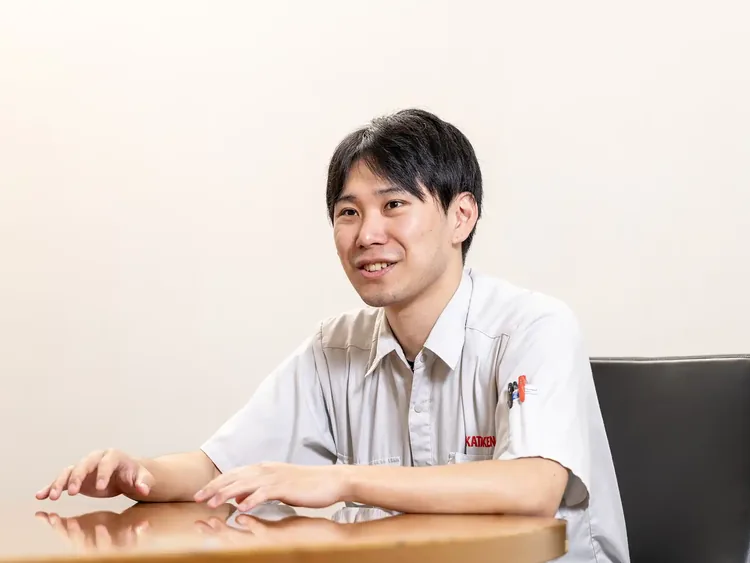
Because we handle everything in-house from design to manufacturing, there is a lot to learn.
There is still a lot I need to learn, such as how to deal with problems when they occur. Right now, gaining experience is my top priority. I make plenty of mistakes, but I also learn a lot from them, so I keep taking on challenges without being afraid. Because we handle every step of die work in-house, from design to manufacturing, I gain experience and enjoy work that I couldn't find anywhere else. When I was in charge of a drawing die, one of the most difficult types of die, a combination of demanding conditions such as ambient temperature and heat in the metal made it hard to determine the dimensions, and it took six months to deliver. But I was really happy to see my name engraved on the die as its designer. Another appeal of working with dies is being involved in many products that haven't reached the market yet. When I see parts made with a die I worked hard to complete used in a new product, such as a home appliance or a car, and then see that product heavily advertised on TV, it's a really moving experience.